
Managing organic waste in alpine environments is often misunderstood.
A number of persistent myths suggest that organics management is too difficult, not worthwhile, or simply not feasible in cold and snowy conditions. While alpine environments do present additional challenges, best practice demonstrates that effective organics management is both achievable and valuable, including during the snow season.
Practical measures such as separation bins and liners, targeted staff and visitor education, on site in vessel composting, and efficient logistics for transport to local organics processing facilities are already being successfully applied across ARV operations. These approaches demonstrate that cold conditions alone are not a barrier to responsible organics management.
Another common misconception heard at ARV is that the volume of organic waste generated in alpine resorts is too small to justify the effort. However, waste audits and on ground programs indicate that organic material typically makes up between 40 and 55 per cent of alpine resort waste streams. While the exact proportion varies by resort, season and waste source (for example hospitality venues versus public areas), organics consistently represent the single largest component of alpine waste.
From an ARV perspective, the assumption that organics management is not possible in alpine environments is not only incorrect but presents an environmental risk if left unaddressed. The alpine resorts operate within fragile, protected environments where cumulative environmental impacts are significant. When organic waste is sent to landfill, it generates methane — a potent greenhouse gas that contributes to climate change. Rising emissions are linked to warmer temperatures, reduced snowfall reliability and more variable natural snowfalls, directly affecting alpine ecosystems, communities and long-term resort sustainability when there is a dependency on the snow season for most business operators.
In 2010, Mt Buller–Mt Stirling, Falls Creek and Mt Hotham launched the Living Bin program — a voluntary initiative designed to remove food organics from the waste stream and recycle them into valuable compost. In 2025 alone, more than 93 tonnes of organics waste from Mt Buller, Falls Creek and Mt Hotham were diverted from landfill, avoiding over 195 tonnes of CO₂ equivalent emissions. This is comparable to removing more than 40 fuel powered vehicles from the road for a year. Mt Baw Baw and Lake Mountain Alpine Resorts are now also joining the program.
Diverting organics from landfill reduces emissions, supports Victoria’s circular economy objectives, and helps protect high value alpine environments. For Victoria’s alpine resorts, effective organics management is a key element of responsible environmental stewardship in a changing climate.
If you haven’t already, join the ‘Living Bin’ program this winter and save the snow!
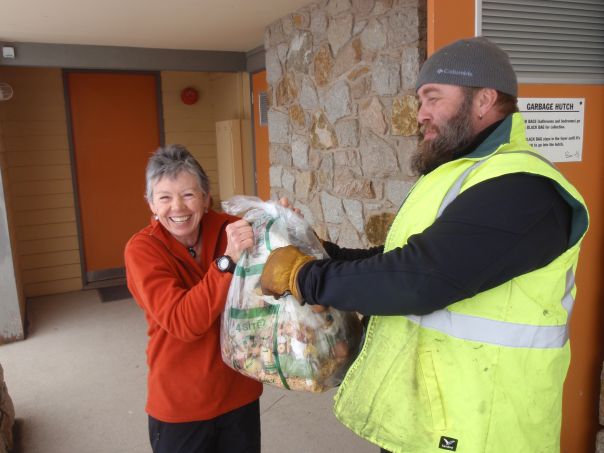
- The Hotham team are big advocates for The Living Bin program
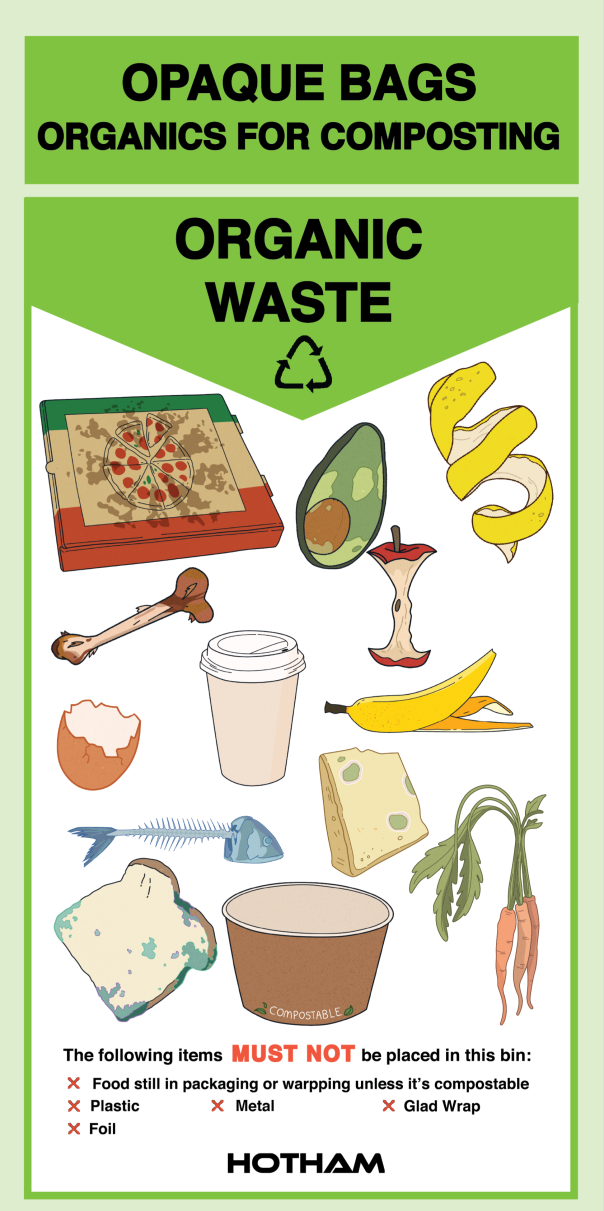
- An example of organic matter
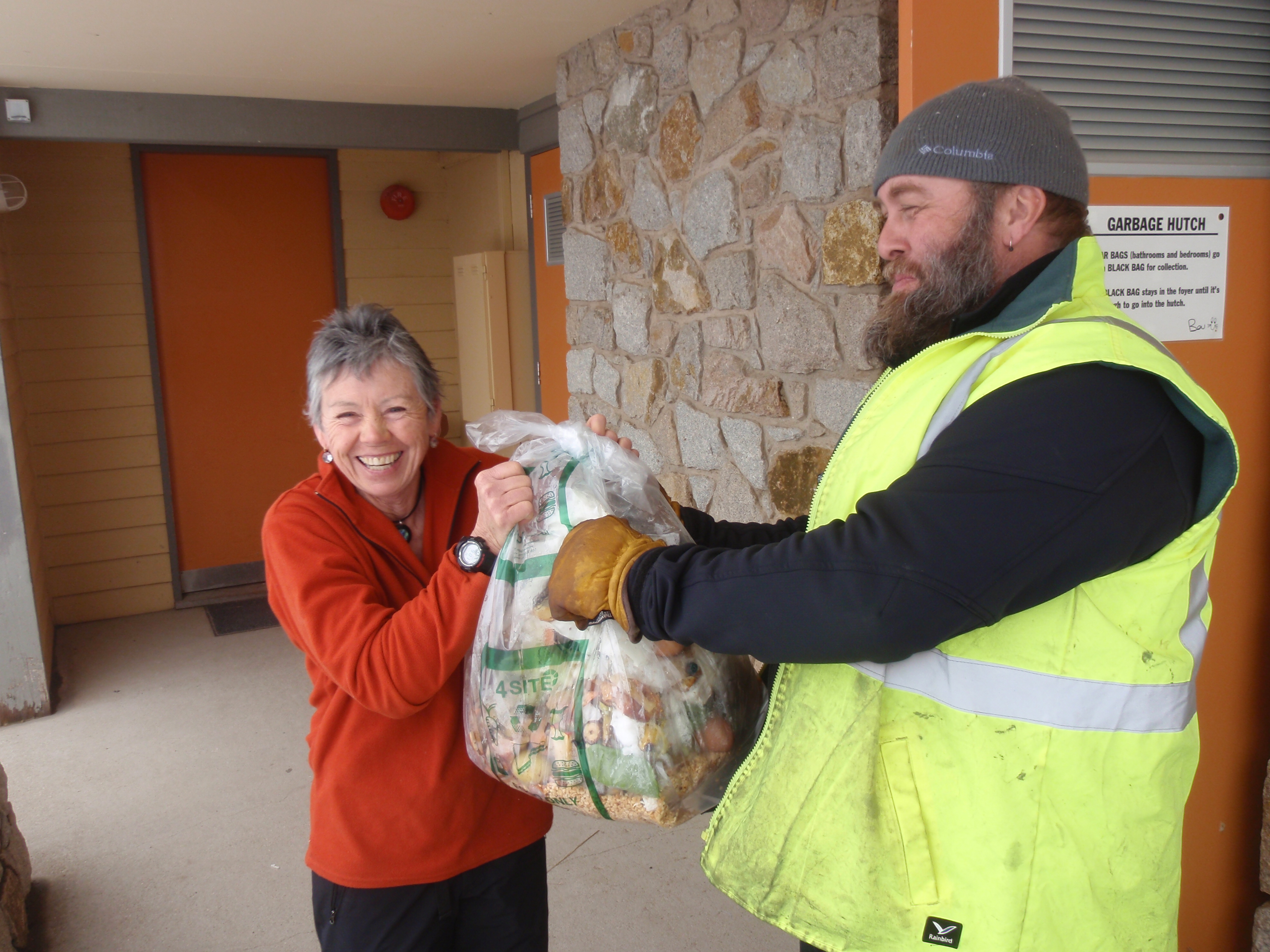
The Hotham team are big advocates for The Living Bin program
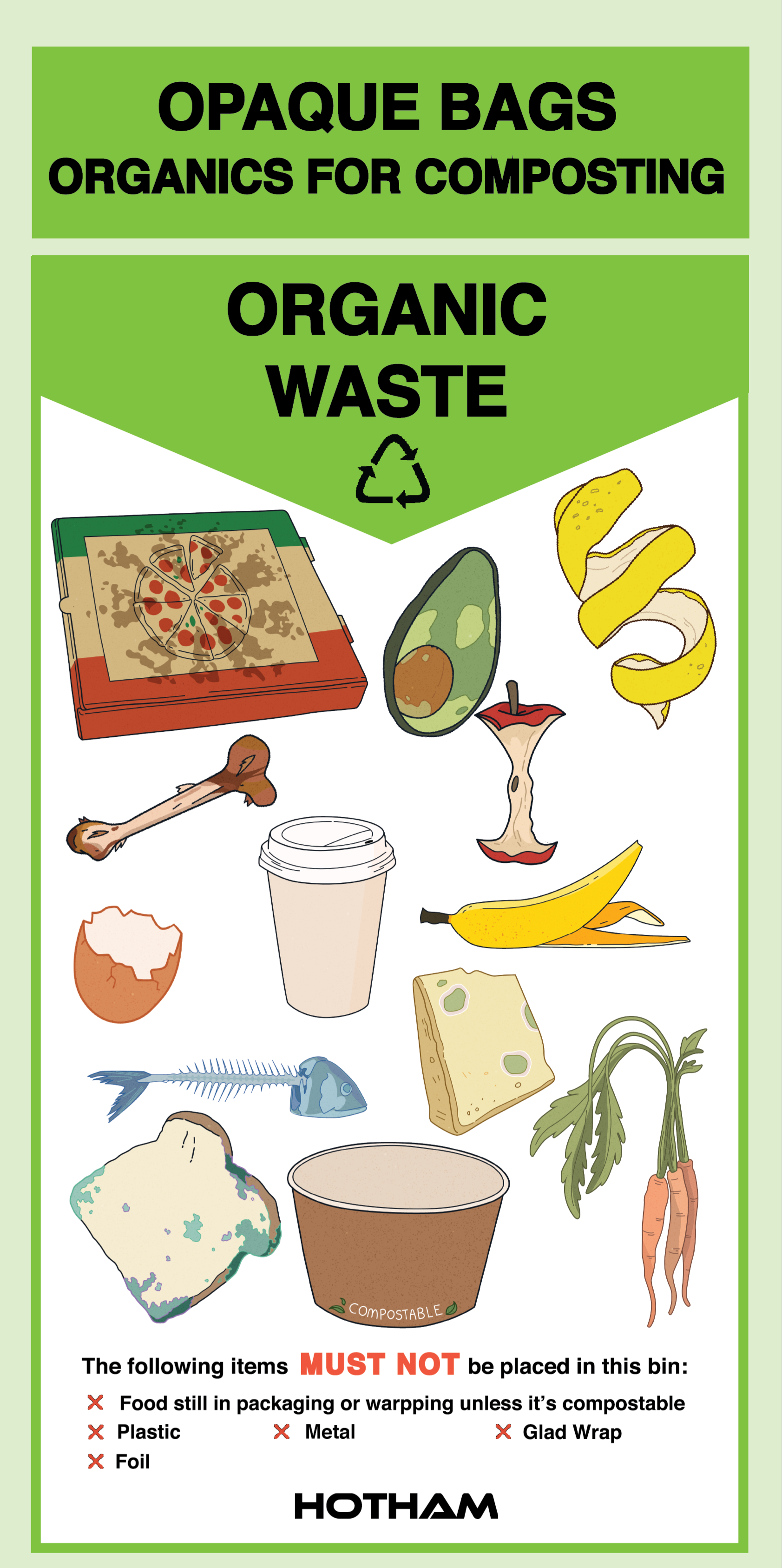
An example of organic matter
Page last updated: 22/04/26