
On this page:
Scientific name: Liopholis guthega
About
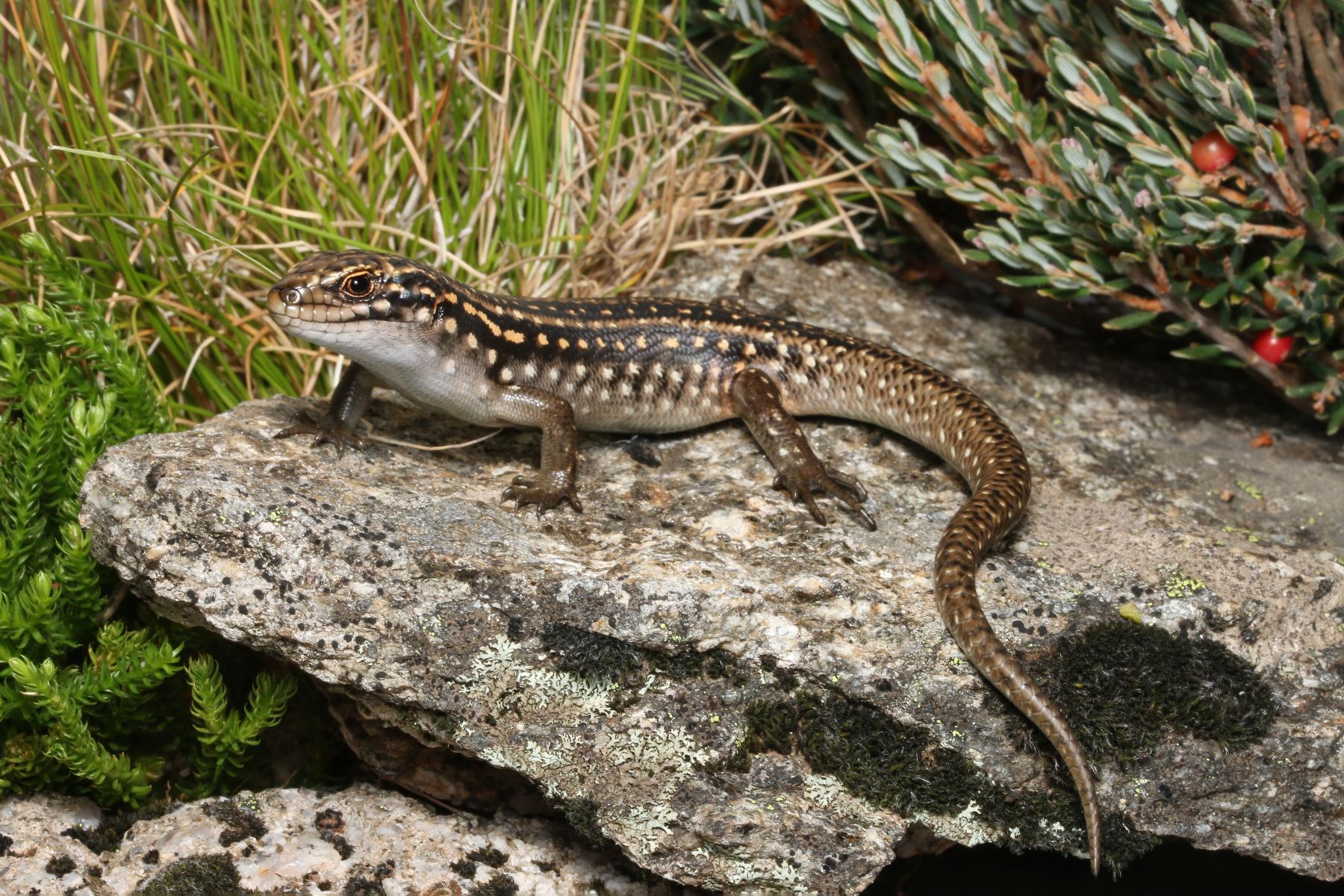
The Guthega skink is a very rare species and the highest‑recorded skink in Australia. It occurs only in alpine resorts, the Bogong High Plains and Kosciuszko National Park, between 1,600 and 2,170 m elevation.
With its greyish‑brown colour and pale spots, it blends in with rocky surroundings. It relies on alpine tussock grasslands, heathlands and snow gum woodlands for habitat, where it creates burrow systems and lives in family groups.
These little reptiles can live for more than 10 years. Females give birth to 1 to 4 live young in the summer. They can often be seen basking on rocks taking in the warmth on sunny days. Over winter, for about 5 months, Guthega skinks hibernate under the snow.
Their main diet is invertebrates such as:
- insects
- worms
- spiders
- snails.
Guthega skinks help control populations of grasshoppers, crickets and beetles, reducing damage to alpine vegetation during seasonal increases.
Threats
Climate change threatens the Guthega skink as rising temperatures degrade sensitive alpine habitat.
Habitat disturbance from development and degradation caused by introduced species such as deer, feral horses and weeds are major threats.
Vegetation changes from more frequent and intense bushfires are another form of habitat loss, fragmentation and degradation, leaving skinks vulnerable to predators.
The Guthega skink is currently listed as nationally endangered.
Page last updated: 21/04/26