
On this page:
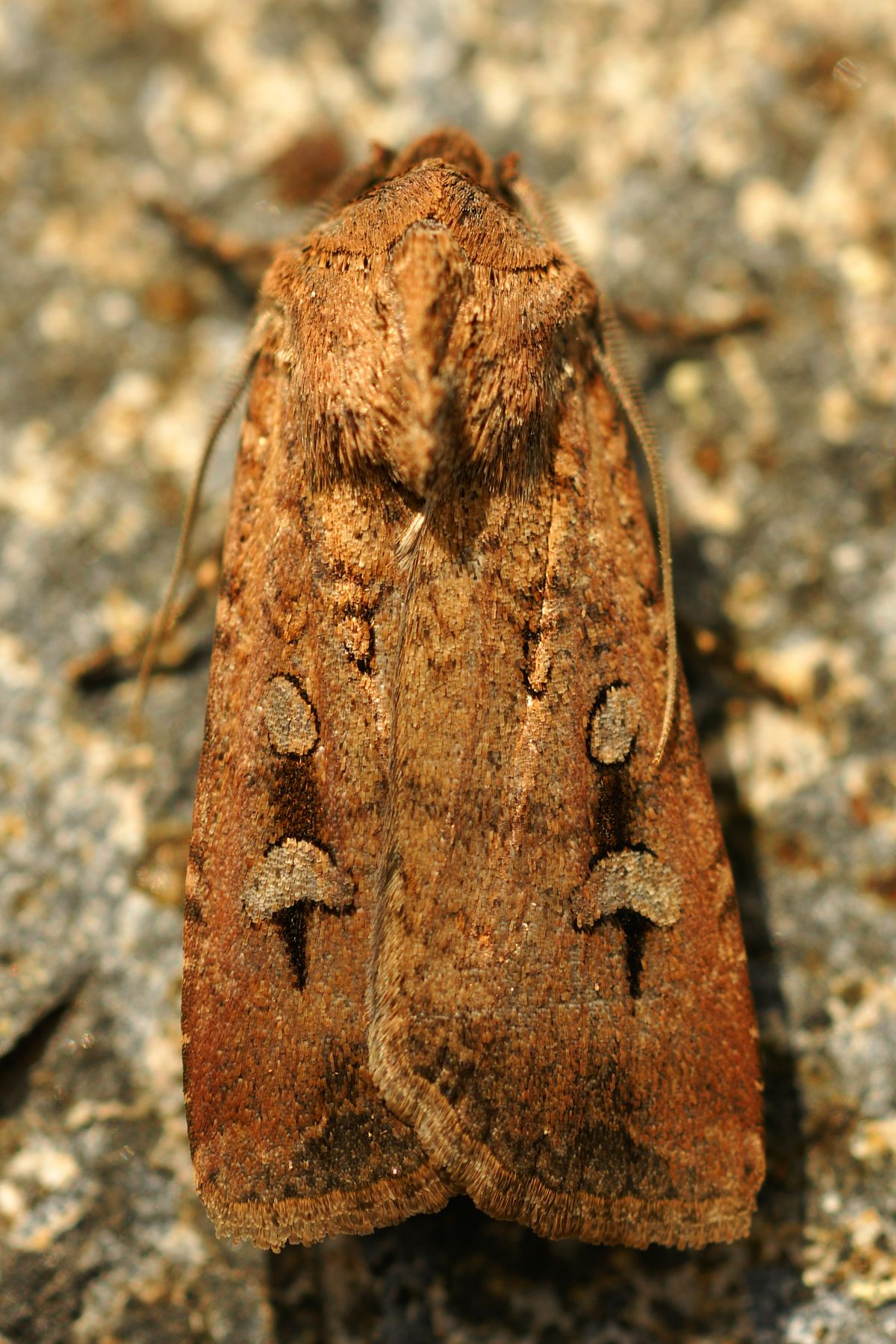
Scientific name: Agrotis infusa
About
Bogong moths are a keystone species for the health of alpine ecosystems in Australia. They are a crucial food source for critically endangered mountain pygmy-possums and many other high elevation species.
Traditional Owners have long harvested migrating bogong moths as a plentiful and nutritious food source. Different groups gathered on the high plains to conduct important business and cross‑cultural ceremonies during the migration period.
Where are they found
Bogong moths fly annually in spring from the warm inland plains of eastern Australia to aestivate, a form of dormancy during warmer periods, in the cooler alpine areas along the Great Dividing Range.
The moths then return to these inland areas in autumn to breed when food resources are suitable for their larvae.
Mass migrations usually occur at night. Moths use the earth’s magnetic fields and light from the night sky to orient towards alpine areas of the Australian Capital Territory, the Victorian Alps and the Snowy Mountains in New South Wales.
Each year, every moth makes this huge journey for the first time. This behaviour shows an inbuilt ability to navigate long distances.
Threats
Bogong moth numbers suffered a catastrophic 99.5% decline between 2018 and 2021.
In 2021, the Bogong moth was added as an endangered species to the International Union for Conservation of Nature (IUCN) red list of threatened species.
The cause of the sudden population crash is likely due to:
- severe droughts
- fires impacting larval sites
- the use of pesticide
- predation by introduced species
- habitat loss
- light pollution diverting migrating moths from their paths.
The loss of any species is upsetting, but the rapid decline of Bogong Moths impacts many other species.
Bogong moths are a foundation species in the alpine food chain and support much of the alpine ecosystem.
They are also nectar eaters and act as pollinators, and their huge reduction in numbers could have a significant effect, not only on the small mammals relying on them as a food source, but also on plants along their migration route and in the alps.
How you can help
You can help Bogong moths and all the species that rely on them by:
- not using insecticides
- turning off unnecessary lights at night
- reducing your carbon emissions
- planting native alpine flowers such as Correa, eucalypts, tea tree and grevillea that attract this species.
Suitable alpine plants of local provenance can be found at the Victorian Alps Nursery.
ARV monitors Bogong moth numbers throughout the year to determine trends in their numbers. You can record Bogong moth sightings using the moth tracker to support conservation efforts.
Page last updated: 21/04/26